2026 Best Residential Windows for Energy Efficiency and Durability?
Choosing the right residential windows is essential for homeowners today. Energy efficiency and durability are crucial factors. The right windows can significantly reduce energy costs and enhance comfort. Many homeowners overlook how windows affect energy bills.
In 2026, various materials and technologies will dominate the market. For example, triple-pane glass and low-E coatings will gain popularity. These features help maintain indoor temperatures. However, recognizing quality variations in brands is important. Some may promise high efficiency but fall short in performance.
Investing in high-quality residential windows is not merely a choice; it’s a necessity. Proper installation plays a vital role in performance. A poorly installed window can lead to air leaks and moisture issues. Thus, attention to detail at every stage is crucial. While shopping, making informed decisions about features and energy ratings is key for long-term benefits.
Overview of Energy Efficiency in Residential Windows
Energy efficiency in residential windows is crucial for reducing energy costs. Well-designed windows can regulate temperature, minimizing the need for heating and cooling. This leads to significant savings on energy bills over time. Typically, energy-efficient windows come with features like double or triple glazing, which improves insulation. Low-emissivity (Low-E) coatings reflect heat, enhancing performance further.
Many homeowners overlook the importance of air leakage. Even the most efficient glass won’t perform well if air can escape. Proper sealing and caulking around window frames are essential for maximum efficiency. However, some older windows may still have gaps, leading to wasteful energy consumption. Regular inspections can identify these issues.
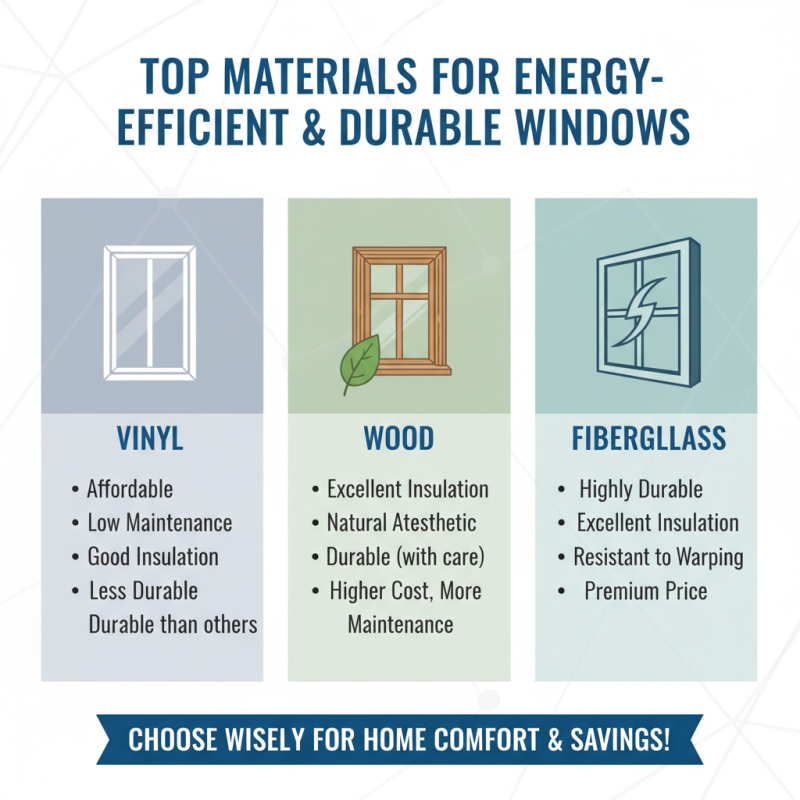
Another aspect to consider is the frame material. Options like vinyl, wood, and fiberglass each offer different levels of durability and insulation. While vinyl is popular for its low maintenance, wood alternatives provide better aesthetics but may require more upkeep. The decision may come down to personal preference and climate considerations. Balancing functionality with appearance is a challenge that many homeowners face.
2026 Best Residential Windows for Energy Efficiency and Durability
Key Features of Durable Windows for Home Use
When selecting durable windows for your home, several key features should be prioritized.
Quality materials are vital. Opt for windows made from fiberglass or vinyl, which offer long-lasting performance.
These materials resist warping and are less prone to issues like cracking over time.
Energy efficiency is another crucial aspect. Windows with multiple panes provide better insulation.
Low-E coatings can enhance energy conservation by reflecting heat.
A good seal is equally important. Windows that fit snugly in their frames will minimize air leaks. This reduces heating and cooling costs over time.
However, the installation process can impact durability significantly.
Even the best windows will fail if not installed correctly. Regular maintenance is essential too.
Inspecting and cleaning frames and seals every year can extend the life of your windows.
Keep these factors in mind to ensure that your investment in new windows is worthwhile.
Top Materials for Energy-Efficient and Long-Lasting Windows
Choosing the right materials for residential windows is crucial for energy efficiency and durability. An ideal window should provide excellent insulation and withstand various weather conditions. Common materials include vinyl, wood, and fiberglass. Each has unique benefits and drawbacks, making it essential to evaluate your specific needs before deciding.
Vinyl windows offer good insulation and require minimal maintenance, but they may not be as durable under extreme temperatures. Wood windows have a classic appeal and excellent insulating properties. However, they need regular upkeep to prevent rot and warping. Fiberglass is strong and resistant to temperature changes, but it can come at a higher cost. Homeowners must weigh aesthetics against practicality and long-term performance.
Choosing window materials isn't just about looks; it's also about efficiency. For instance, you might prefer the aesthetic of wood. Yet, if maintenance is a concern, vinyl could be more practical. Consider energy ratings and local climate when deciding. The perfect window material balances style, durability, and efficiency, but the decision may require careful thought. After all, the wrong choice can lead to increased energy bills or constant repairs.
Leading Brands of Windows Recognized for Energy Efficiency in 2026
In 2026, the quest for energy-efficient residential windows has gained momentum. Brands are pushing the envelope to deliver superior performance in energy conservation. According to the National Fenestration Rating Council (NFRC), windows with high Energy Rating Label scores can significantly reduce energy costs by up to 30% annually. This statistic highlights the importance of selecting windows that contribute to sustainability.
Leading manufacturers are recognized for advancing technologies that improve insulation. Triple-glazed windows, for example, outperform double-glazed options by almost 40% in terms of insulation effectiveness. Yet, homeowners often overlook aspects like installation quality. Poor installation can offset the benefits of high-performance windows, leading to energy loss.
Tips: Always ensure professional installation for optimal performance. Consider regular maintenance checks, as unaddressed wear can diminish efficiency. Additionally, factor in local climate conditions—specific styles may be better suited depending on regional temperature fluctuations. These insights will guide homeowners in making informed choices. Prioritizing energy efficiency could offer both financial savings and enhanced home comfort.
Comparative Analysis of Window Types: Vinyl, Wood, and Aluminum
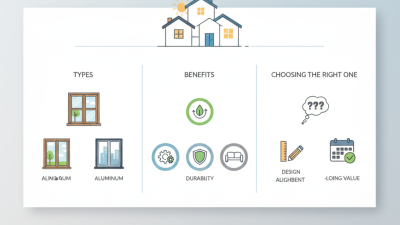
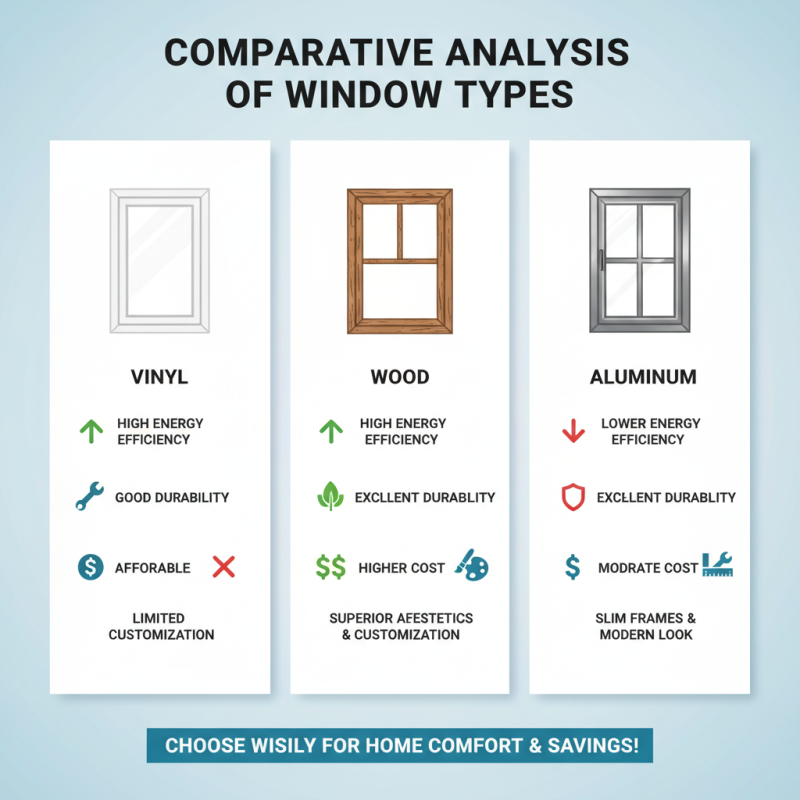
When choosing windows for your home, energy efficiency and durability are crucial. Vinyl, wood, and aluminum are popular materials, each with its pros and cons.
Vinyl windows are often praised for their excellent insulation and low maintenance. They resist moisture and don't warp easily. However, they can fade over time and may not appeal to everyone aesthetically. Consider personal style when selecting vinyl options.
Wood windows offer unparalleled beauty and natural insulation. They can last for decades with proper care. However, they require regular maintenance to prevent rot and damage. If durability is your priority, think about the extra upkeep needed.
Aluminum windows are known for their strength and slim profiles. They are resistant to damage but can conduct heat. Adding thermal breaks can enhance their energy efficiency.
Tips: Always check the energy performance ratings. Look for windows that meet local energy guidelines. Consider your climate when selecting materials. Each choice influences your home's overall efficiency and comfort.